
Brain Fog & Holistic Therapies
Why brain fog needs more than one solution
Research over the past decade has transformed our understanding of menopause brain fog. We now know it isn't "just in your head," nor is it simply the result of getting older. Changing hormone levels affect the way the brain produces energy, communicates between nerve cells and regulates functions such as memory, attention and concentration. For many women, these changes are enough to make everyday tasks feel unexpectedly difficult.
But hormones rarely act alone.
Brain fog often develops alongside poor sleep, chronic stress, anxiety, muscular tension and the relentless mental load that many women carry every day. Each of these places additional demands on the brain. A poor night's sleep reduces the brain's ability to consolidate memories and restore attention. Persistent stress keeps the nervous system on high alert, making it harder to focus and think clearly. Ongoing pain or muscle tension creates a constant stream of sensory information that the brain must process, even when we are unaware of it.
Rather than existing as separate problems, these factors interact with one another. Poor sleep increases fatigue. Fatigue makes it harder to cope with stress. Stress often leads to more muscle tension, which can contribute to headaches, disrupted sleep and feeling physically drained. It is easy to become trapped in a cycle where each problem reinforces the next, making brain fog feel progressively worse.
This is where holistic therapies can play an important supporting role.
A holistic approach recognises that while it cannot change the hormonal transition of menopause, it can help address many of the factors that influence how clearly the brain functions from day to day. Instead of focusing on one symptom in isolation, it asks a broader question:
What is placing the greatest burden on this woman's brain today?
For one woman, the answer may be weeks of fragmented sleep. For another, it may be the constant tension she carries across her shoulders, neck and jaw after months of stress. Someone else may be mentally exhausted from juggling work, family and caring responsibilities without ever allowing herself time to recover.
The treatment is then shaped around those needs.
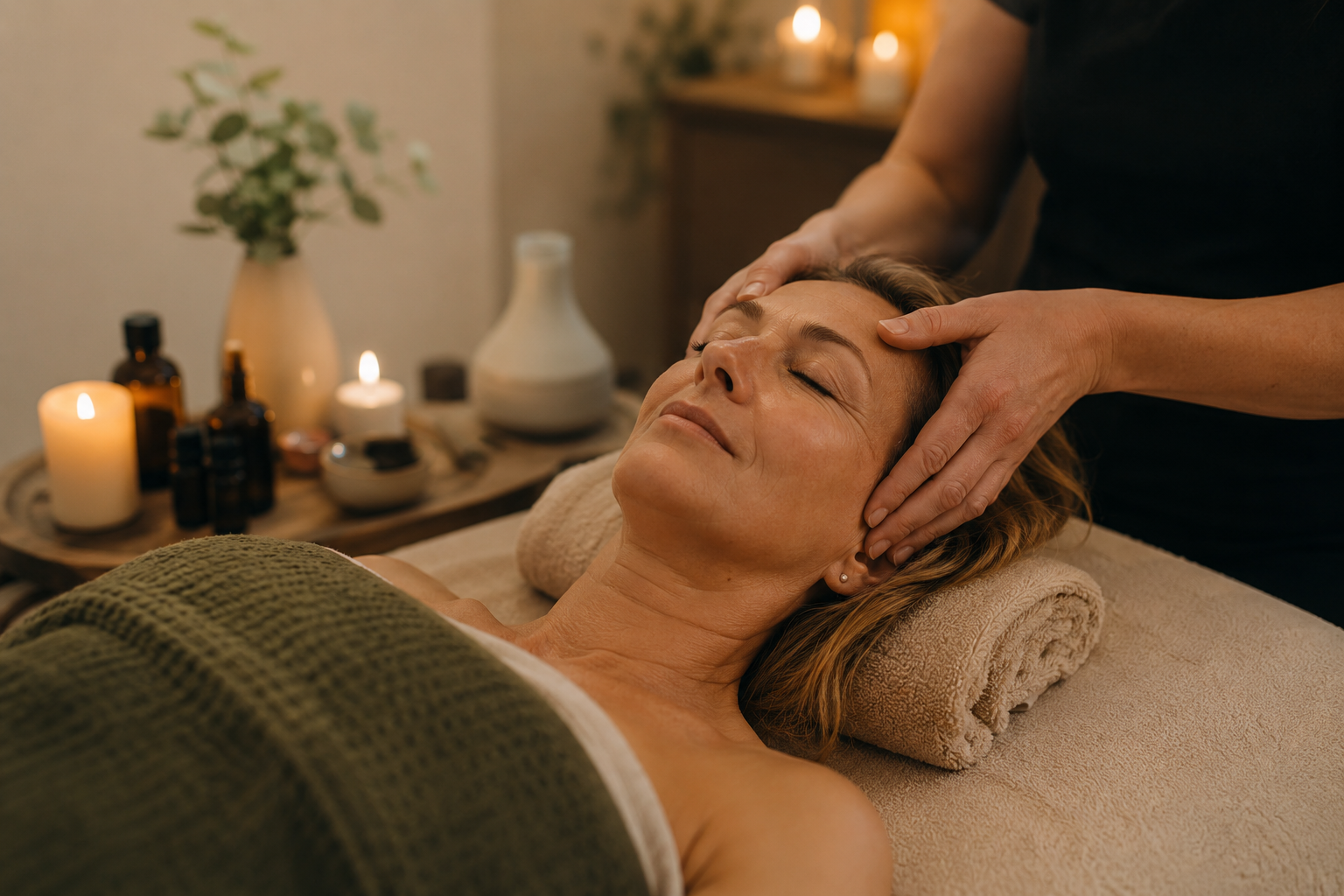
Massage, for example, offers far more than relief for tired muscles. Therapeutic touch can help ease muscular tension, encourage slower breathing and create a sense of physical relaxation. As the body begins to soften, many women notice that their minds begin to settle too. When the brain is no longer processing persistent discomfort or responding to constant physical tension, it has more opportunity to switch its attention elsewhere.
Reflexology offers another route to relaxation. Although there is no evidence that stimulating reflex points directly changes hormone levels, many women describe feeling deeply relaxed during and after treatment. That sense of calm can be particularly valuable when anxiety, poor sleep and mental overload are contributing to brain fog.
Aromatherapy works through a different pathway altogether. Our sense of smell has direct connections with areas of the brain involved in emotion, memory and behaviour. Certain aromas can promote feelings of calm, comfort or alertness, making them a valuable addition to treatments designed to reduce stress and encourage relaxation. While essential oils do not alter the hormonal changes of menopause, they can help create an environment in which the brain finds it easier to unwind.
Even something as simple as lying quietly in a warm, peaceful room has value. Modern life rarely allows the brain to stop processing information. Throughout the day we move from conversations to emails, from shopping lists to family responsibilities, with little opportunity to pause. During a treatment there is nowhere else to be, nothing to organise and no decisions to make. For many women, it is the first time all week that their brain is not being asked to solve another problem.
That period of rest matters.
The brain is an energy-hungry organ. It performs best when it is well rested, well nourished and not overwhelmed by competing demands. While a treatment cannot restore declining oestrogen or eliminate brain fog overnight, it can provide the conditions in which the brain has the greatest opportunity to recover from the pressures of everyday life. Many women leave feeling calmer, lighter and mentally clearer—not because menopause has disappeared, but because some of the factors making brain fog worse have been reduced.
Perhaps this is the greatest strength of holistic therapy.
It doesn't promise to cure menopause.
It doesn't claim to rebalance hormones or reverse the biology of the menopausal brain.
Instead, it acknowledges that brain fog has many influences, and that supporting the whole person—improving sleep, easing physical tension, calming the nervous system and providing genuine time to rest—can make a meaningful difference to how a woman experiences one of menopause's most frustrating symptoms.
For many women, that difference is enough to help them think more clearly, cope more confidently and feel a little more like themselves again.